The slab outside many back doors is too small for a table and a grill at once. New concrete patios, extensions to that builder slab, pads for a grill or a hot tub, and replacement of patios that have cracked or tipped toward the house: that is the patio work Grapevine Custom Concrete handles in Grapevine, TX.
Concrete patios sit on the same clay as everything else here, so the same care applies. The ground under the slab has to be firm and even, and the surface has to shed water away from the foundation.
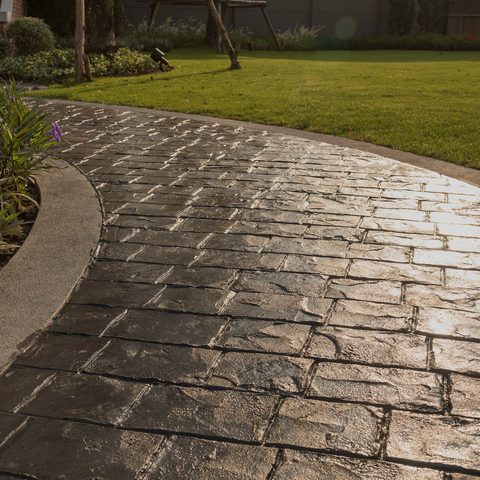
Size, shape and finish are where you get to decide. A plain rectangle with a broom finish suits plenty of yards. Curves, a stamped stone pattern, color or a border can make a patio look like it belongs to the house.
If the patio needs a path to it, the sidewalks and walkways page covers that. An old patio with one bad corner may only need concrete repair.
Once you have a rough idea of the size, call 817-776-4658 and we will come and walk the yard with you.
Free quote. No obligation.
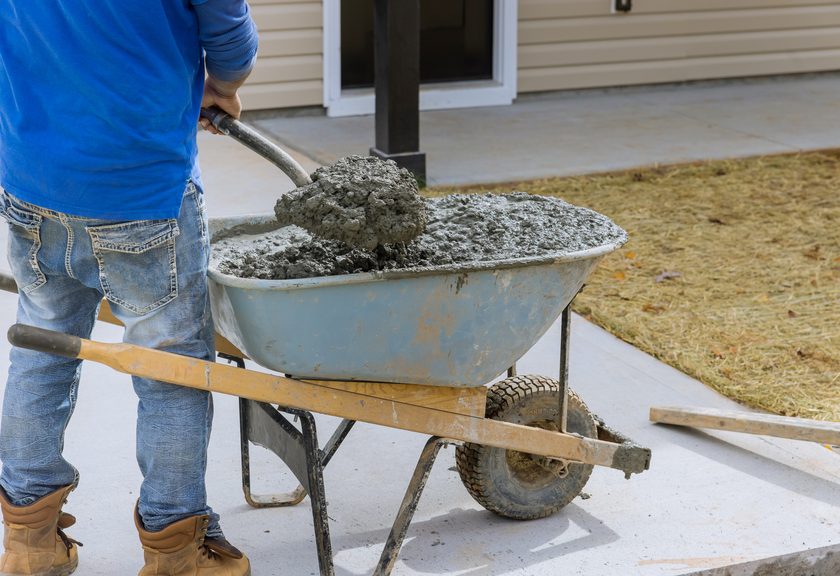
Backyard work has its own variables, mostly about getting material back there and getting the ground to fall the right way. The main ones:
If water from the roof or the drive already heads toward the patio area, mention it; dealing with that is part of planning the slab. The concrete driveways page explains what goes into that side.
The shape gets marked out on the ground and checked against the doors, the downspouts and the fence line. The finished surface needs to sit below the door threshold and fall gently away from the house so rain runs out into the yard.
Grass and topsoil come out, the clay is dug to depth, and a base layer is spread and compacted. Where the patio meets the house slab, expansion material or a tie-in is planned depending on the design.
Forms are set to the final height and slope. Curves are bent from flexible form material. Reinforcement is placed through the slab to help hold it together.
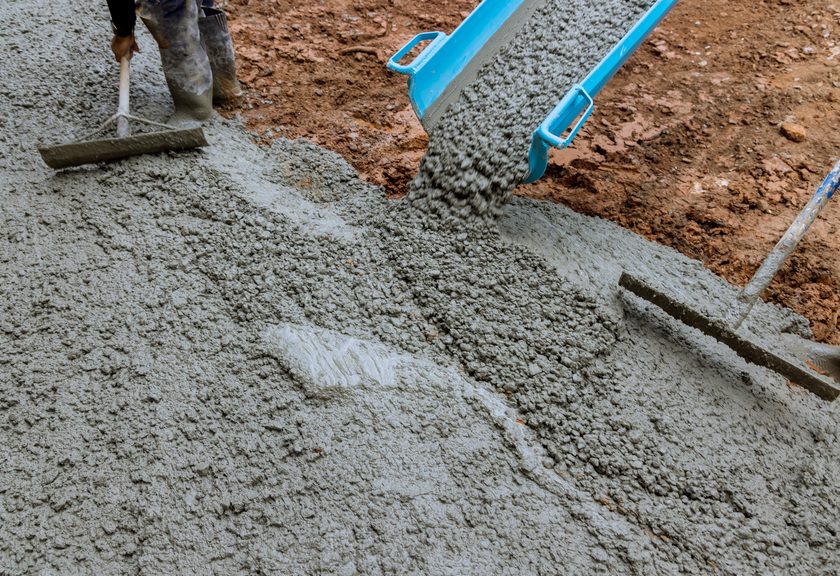
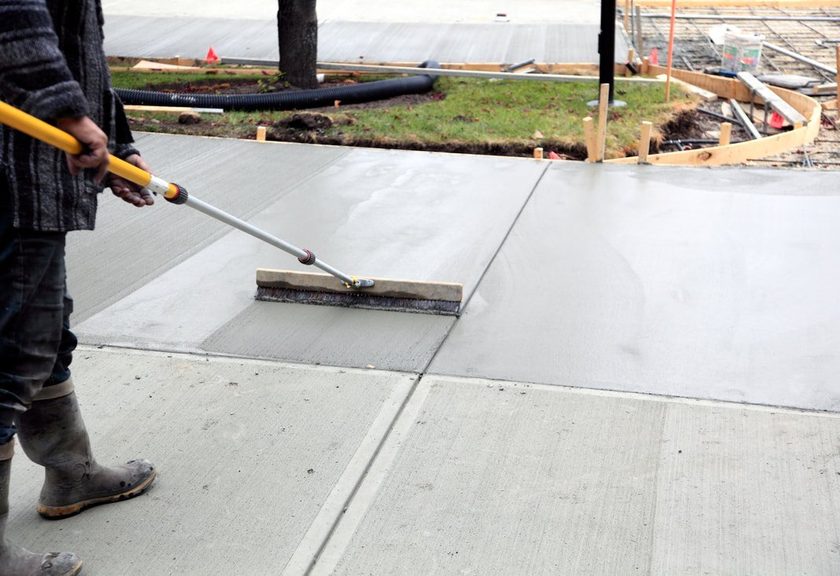
The concrete is placed, leveled and floated. For a broom finish, a broom goes across it. For stamped work, color goes on and the stamps are pressed in while the surface is still soft. Joints are tooled or cut.
The slab is kept damp or covered with a curing compound so it does not dry out on a hot afternoon. Decorative patios are usually sealed once the concrete has cured.
Signs an older patio should come out instead of being patched: it has sunk toward the house, water stands against the foundation after rain, or cracks have broken it into loose pieces.
From the pour to the broom finish on a plain backyard slab.


Usually. A gentle fall is easy to work with, since the patio has to drain away from the house anyway. A steeper yard may call for a step down partway, or for the low side to be built up and held by a thick edge or a small wall. Either way, the plan has to leave rain a path out into the yard.
It can. Posts that carry a roof usually sit on footings, and those are much easier to plan before the slab goes in. The city’s published answers also treat a patio slab that carries a roof differently from an open one, so ask Building Inspections about your plans.
Plain broom-finished concrete asks the least of you. Stamped and colored surfaces look richer but are usually sealed, and that sealer wears and needs renewing. Exposed aggregate falls somewhere in between.
It can be. Digging for a slab cuts roots, and a slab poured over a root zone can be lifted later as the roots grow. Ask a tree service how close you can dig, and think about setting the patio just outside the spread of the main roots so you keep the shade without the trouble.
Thinking about a new patio? 817-776-4658 is the number to call, and the form at the top works as well.
Before you settle on a design, the Grapevine home page has notes on soil, storms and who to ask about permits. The contact page has the number.